
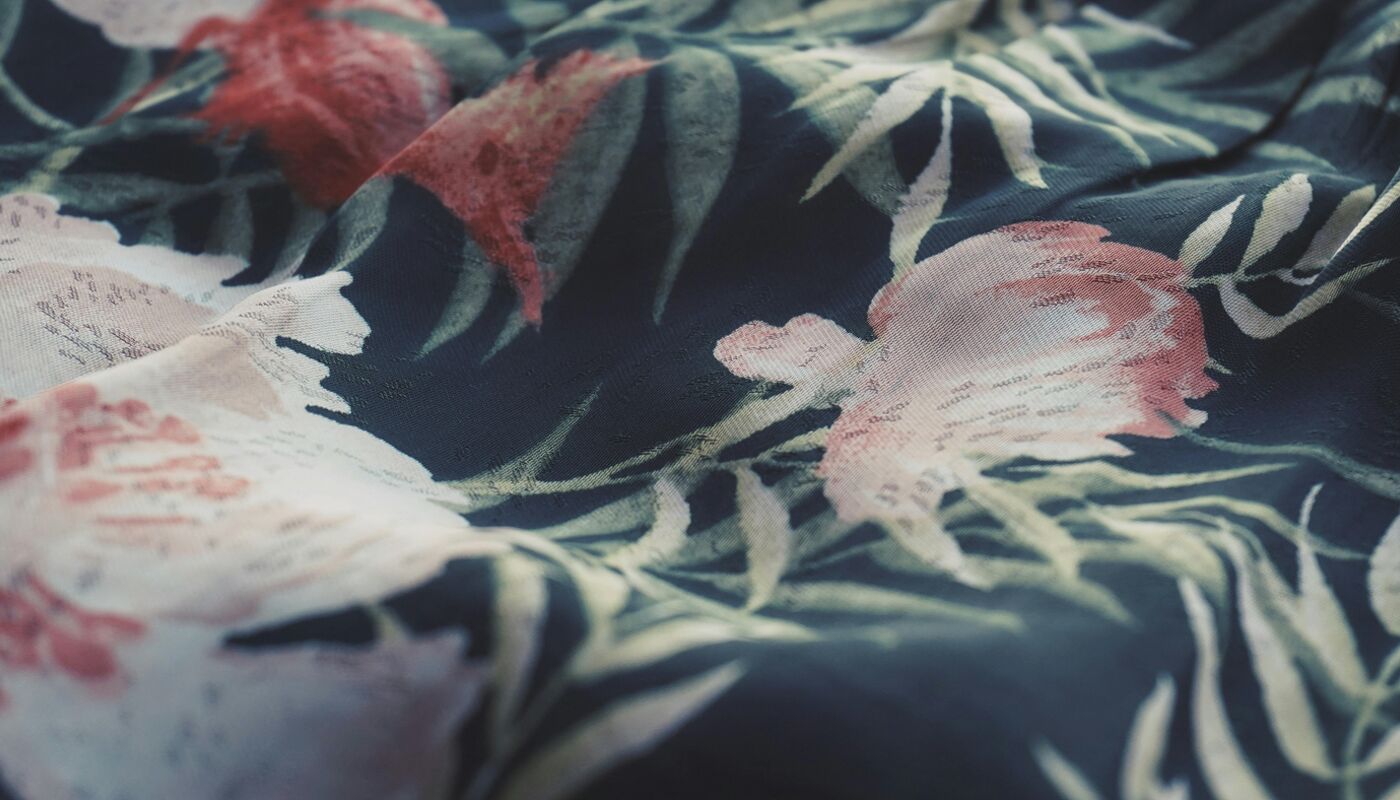
Digital fabric printing is no longer an emerging technology — it is a fully established, commercially proven production method that is reshaping the way businesses across a wide range of sectors operate. From the way products are designed and manufactured to the way they are marketed and delivered, custom fabric printing is enabling companies to move faster, waste less, and offer more. The industries that have embraced digital textile printing are not simply adopting a new tool — they are rethinking what is possible.
In this article, we explore five industries where digital fabric printing is making a measurable difference, and why now is the right time for businesses in these sectors to take full advantage of what this technology offers.
Few industries have felt the impact of digital fabric printing as profoundly as fashion and apparel. For decades, the fashion world operated on a model built around long lead times, large minimum order quantities, and significant upfront investment in screens, rollers, and tooling. Bringing a new print design to life was a costly and time-consuming commitment — one that forced designers to play it safe and manufacturers to overproduce.
Custom fabric printing has dismantled that model. Today, a fashion brand can take a design from a digital file to a finished printed fabric in a fraction of the time it once required. There are no screens to set up, no color separations to prepare in advance, and no minimum run sizes that force brands to order more than they need. A designer can test ten different colorways of the same pattern, produce a small run of samples, evaluate market response, and scale up production — all without the financial risk that previously made experimentation prohibitive.
This agility is especially valuable in a market where consumer tastes change rapidly and trend cycles have compressed dramatically. The ability to react in real time — to introduce a new print mid-season, to offer limited-edition collections, or to personalize garments for individual customers — is a genuine competitive advantage that digital fabric printing makes achievable.
Sustainability is another dimension where digital textile printing is transforming fashion. Traditional dyeing and printing processes are among the most resource-intensive in manufacturing, consuming vast quantities of water, energy, and chemical fixatives. Digital printing applies ink directly and precisely where it is needed, dramatically reducing water consumption and chemical waste. For fashion businesses under increasing regulatory and consumer pressure to demonstrate environmental responsibility, this shift is not optional — it is essential.
From independent designers producing small-batch luxury pieces to larger apparel manufacturers managing complex seasonal collections, digital fabric printing is giving the fashion industry the tools to be more creative, more responsive, and more sustainable all at once.
The interior design industry has always been driven by the pursuit of the unique. Clients invest in their living and working spaces because they want environments that reflect their individual tastes — not something that looks like it came off a production line. For interior designers and home décor brands, digital fabric printing has become an indispensable tool for delivering exactly that level of personalization.
Custom upholstery fabrics, bespoke curtain and drape textiles, printed cushion covers, decorative wall hangings, and custom bedding — all of these can now be produced to order, in any quantity, with any design, thanks to digital textile printing technology. An interior designer working on a high-end residential project can specify a fabric printed with a pattern that has been created exclusively for that client and that space. A boutique hotel can outfit its rooms with printed textiles that carry its visual identity throughout — from the bedlinen to the curtains to the decorative throws — with perfect color consistency and no compromise on quality.
The ability to print on a wide variety of fabric substrates — from natural fibers like cotton and linen to synthetic and blended materials — means that digital fabric printing can meet the diverse technical requirements of interior applications. Upholstery fabrics need durability and rub resistance. Curtain fabrics need to drape well and handle light exposure. Each of these requirements can be addressed by selecting the right base fabric and the right printing process, while still achieving the visual design outcome the client requires.
For home décor brands operating in the e-commerce space, digital fabric printing offers another critical advantage: on-demand production. Rather than holding large inventories of pre-printed textiles — with all the warehousing costs and obsolescence risk that entails — brands can print to order and fulfill individual customer purchases without overproduction. This model is not only more efficient; it is more sustainable and more financially resilient.
As consumer appetite for personalized home environments continues to grow, digital fabric printing is giving interior designers and décor brands the ability to deliver on that appetite at every price point and project scale.
The sports and activewear sector has become one of the most dynamic areas of growth for digital fabric printing. The combination of high performance technical requirements, strong visual branding, and increasing demand for personalization makes this industry a natural fit for what digital textile printing does best.
At the professional level, sports teams require kit that is technically precise, visually consistent, and produced to exacting standards. Digital fabric printing — and in particular dye-sublimation printing on high-performance polyester fabrics — delivers all of this with a level of color accuracy and durability that traditional methods struggle to match. Sublimation printing works by converting dye into a gaseous state under heat and pressure, causing it to bond permanently with the polyester fibers at a molecular level. The result is a print that will not crack, peel, or fade, even after repeated washing and intensive use in demanding conditions. For sports clubs and professional teams, this means kit that looks as sharp after a full season as it did on the first day.
Beyond professional sport, the activewear market has expanded enormously as sportswear has become everyday fashion. Consumers expect activewear to perform technically — managing moisture, supporting movement, maintaining shape — while also looking exceptional. Digital custom fabric printing allows activewear brands to deliver complex, multi-color designs with photographic-quality gradients and intricate patterns, all on stretch fabrics that move with the body without distortion.
The personalization opportunity in this sector is also significant. From community sports clubs ordering custom printed team strips in small quantities, to fitness studios creating branded apparel for their members, to individual athletes commissioning personalized training gear — digital fabric printing makes all of this commercially viable in a way that screen printing and traditional textile methods simply cannot. There are no minimum order requirements that force a club to order more than it needs, and no design limitations that prevent a brand from being exactly as creative as it wants to be.
As leisurewear continues to blur the boundaries between performance wear and everyday clothing, digital textile printing is positioned at the center of a sector that shows no signs of slowing down.
In the events and hospitality industry, the physical environment is the product. Whether it is a corporate conference, a luxury wedding, a trade show, a branded retail pop-up, or a five-star hotel, the way a space looks and feels directly shapes the experience of everyone who enters it. Digital fabric printing has given event planners, hospitality businesses, and brand experience teams the ability to take full creative and logistical control of the textiles that define those environments.
For events, the applications are broad and growing. Printed fabric backdrops and stage sets create immersive visual environments for conferences and product launches. Custom printed table linens, chair covers, and decorative textiles transform event venues into fully branded spaces. Exhibition stands built around large-format printed fabric panels are lightweight, easy to transport, and can be produced with photographic-quality imagery that makes an immediate visual impact. All of these can be produced quickly, to precise specifications, and in exactly the quantities required — without the lead times or minimum orders that would have made custom fabric production impractical for one-off events.
In the hospitality sector, digital fabric printing is enabling hotels, restaurants, and resorts to create distinctive interiors that reinforce their brand identity at every touchpoint. Custom printed cushions and throws in guest rooms, branded napkins and tablecloths in restaurants, printed drapes and room dividers in lobbies — all of these contribute to a coherent aesthetic that elevates the guest experience and differentiates the property.
The practical advantages for hospitality businesses go beyond aesthetics. The durability of digitally printed textiles — particularly those produced using high-quality reactive and pigment inks — means that printed furnishings maintain their color integrity through the repeated washing cycles that a hospitality environment demands. Color accuracy across multiple print runs also ensures that when items need to be replaced or supplemented, the new pieces match the existing ones precisely.
For businesses in events and hospitality where first impressions matter enormously, digital fabric printing delivers the quality, consistency, and creative freedom to make those impressions count.
Corporate identity is communicated through every object that carries a brand — from the workwear worn by employees to the merchandise given to clients, from the signage at a trade show to the branded gifts sent to valued customers. For businesses investing in promotional products and corporate branding, digital fabric printing offers a level of quality, flexibility, and scalability that transforms what branded textile products can achieve.
The limitations of traditional screen printing have long constrained what corporate branding on fabric could look like. Complex logos with multiple colors, fine detail, or photographic elements were expensive to reproduce accurately. Minimum order quantities meant that businesses had to commit to large runs even when their actual requirement was modest. Color matching across different product types — ensuring that a polo shirt, a tote bag, and a printed banner all carry exactly the same shade of brand color — was difficult to guarantee.
Digital fabric printing eliminates these constraints. A corporate logo with full color complexity can be reproduced with precision on any fabric substrate, in any quantity, with color accuracy that remains consistent across every single item in the run. A company can order a small batch of branded workwear for a new team, a run of custom printed bags for a client event, and a set of fabric display panels for a trade show — all produced to the same exacting color standard, regardless of the substrate.
The personalization possibilities are particularly powerful for promotional applications. Individualized items — a jacket embroidered with an employee's name, a gift bag printed with a client's company logo, a tote bag customized for each delegate at a conference — create a level of personal connection that generic merchandise cannot match. Digital custom fabric printing makes this level of personalization commercially practical, even at small scales.
For businesses that understand brand consistency as a strategic asset, digital textile printing is the production method that allows that consistency to be achieved reliably, cost-effectively, and at whatever scale the project requires.
Across all five of these industries, the reasons that digital fabric printing is delivering transformation are consistent. It removes the barriers — minimum quantities, long lead times, high setup costs, design limitations — that previously made custom and short-run textile production impractical. It replaces those barriers with capabilities that were simply not available before: on-demand production, unlimited design complexity, photographic color accuracy, consistent results across every run, and a significantly reduced environmental footprint.
The businesses that are gaining the most from digital textile printing are those that have recognized it not as a cost to manage, but as a capability to leverage. They are using it to enter new markets, to offer services their competitors cannot match, to respond to customer demand in real time, and to build brand identities that are expressed consistently across every product they produce.
The technology continues to advance. Printing speeds are increasing. Ink formulations are becoming more versatile and more sustainable. The range of fabric substrates that can be printed digitally is expanding. And the software and color management systems that support the process are becoming more sophisticated, making it easier to achieve complex results reliably and efficiently.
For any business operating in fashion, interior design, sports and activewear, events and hospitality, or promotional products — the question is no longer whether digital fabric printing is relevant to your operation. The question is how quickly you can make it central to it.
At NBPrintex, we specialist in high-quality custom fabric printing for businesses across all industries. Whether you are producing a small run of bespoke garments, a full collection of branded workwear, a set of custom interior textiles, or large-format printed panels for an event — our team has the expertise and the technology to deliver results that exceed your expectations.
We work closely with each of our clients to understand their specific requirements — fabric types, color accuracy standards, production volumes, and turnaround timelines — and we bring the precision and quality that your project demands.
Get in touch with the NBPrintex team today to discuss your project and discover what is possible with digital fabric printing.
Image credit: Suzy Hazelwood on Pexels